You know me, I simply cannot sit still but have this crazy urge to travel and see something new. During the summer heat in Beijing and the busy season at work, I had neglected my passion for a little while and really felt the urge to go somewhere. With no extra holidays left for the year it had to be a short trip. Somewhere close by, easy to get to. Of course I found the perfect spot. Recommended by many friends as a hidden gem in China, we made up our minds to go to Datong. Only a short 45 minutes flights away but rich with cultural sights it seemed to be the perfect destination for a weekend trip.
Do you remember our blog about the summer palace in Chengde? Datong is exactly the same surprising gem. An unbelievably lovely city, with clean streets, a relaxing atmosphere (probably because of all the Buddhist temples) and so much to see. I loved it from the second we stepped out of the plane.
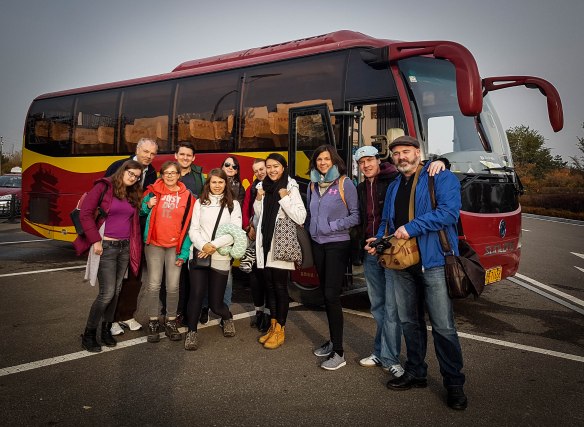
We had a lovely guide called Sara waiting for us at this teeny tiny airport of Datong. Sara is such an amazing and compassionate person. Born and raised in Datong she really loves and knows her city and was eager to tell us all about it while always ensuring to answer all our questions, of which we had plenty. We were quite a big group travelling. 12 people in total. It would be understandable to get nervous or try to rush through all the sites but not with Sara. She literally made all our wishes come true.
So what did we do, you are wondering? Since we arrived early in Datong, our 7 AM flight brought us to our destination before 8 AM, we went on to the first stop on our list: The Yungang Grottoes. 16 kilometres to the West of Datong, and surrounded by the big money earner of the City – coal mines, is a labyrinth of caves that goes on for miles. With a total of 42 caves and more than 200 niches, it holds an amazing amount of over 51.000 Buddha statues. The Yungang Grottoes are one of the most important examples of early Chinese Buddhist cave arts in the whole country and are dated back to the 5th and 6th centuries. The Grottoes were added to the list of UNESCO World Heritage Sites in 2001. If you want to check out the UNESCO website, just follow the link: http://whc.unesco.org/en/list/1039


Funny story: they were actually enlisted also because of the support of the former French President Georges Pompidou. During the Cultural Revolution in China, the grottoes luckily weren’t destroyed, like so many other historical sites. A visit of the French President and the late Chinese Premier Zhou Enlai, emphasized the importance of this cultural heritage site and helped for the protection of the site to really kick in. So while we were walking through this historic site we spotted a crowd of people surrounding two foreigners. This is usually not an unfamiliar sight but they had cameras, video cameras and interpreters with them and seemed very important. Luckily we aren’t shy to ask questions and guess what. The man in the group was nobody less than the son of former President Pompidou. He just happened to be in Datong at the exact same time as us. What a coincidence!
On our way back to the City we were able to really take in the view of the city itself. It is a small city in Chinese terms, only 3.5 Million people. Datong was the capital for almost One Hundred years during the Northern Wei-Dynasty, which you can still feel today. The historical part of the city is surrounded by a giant city wall. A fantastic place to see how big Datong is and what is going on at the moment because the city is changing drastically. I mentioned earlier that the coal industry is very big, therefore Datong is a quite rich city. However, the last mayor has already foreseen that coal is not the way to go for a clean future. So he started to use the coal money to redevelop Datong into a tourist magnet. Thankfully today’s mayor is continuing this path. There are works going on everywhere but you can see the idea behind it already. New and modern buildings with lots of green space in between. Big roads running towards the city centre, hoping to welcome future hordes of tourists. The former palace is under construction as we speak and will be finished next year. A replica, of course, but why not? Many cities have rebuilt castles or important buildings to remind of the past. Everybody knows that Datong looked like this back in the Ming Dynasty but was destroyed during the Cultural Revolution. I think it is a great way to bring back the old cultural heritage of which Datong has plenty. The City Wall for example was only reconstructed in 2012 and is just breathtaking. Inside those Walls, however, is where the real work is happening. The old town is in the process of being completely demolished. The typical high rise buildings with their own personal charme of the Communist era will be replaced by replicas of traditional two story buildings from the Ming Dynasty. I am sure that most of these buildings will be boutique hotels or luxury houses to buy, which many people will not like to hear. But I guarantee that they look nicer than the grey or red concrete of faceless Communist buildings with bad plumbing.


We only had one night in Datong and needed to get up early for the next day, so we dinner in a lovely local restaurant, which Sara recommended to us, and a drink in our hostel before our first day in Datong was over.


When I say early start, I had to keep in mind that in a group of 12 people, not everyone is up for starting the day at 8AM on a Sunday morning. I think it was 9.30 AM when we left the hostel and began our second day with a tour through the Huayan Temple. I don’t know if it was the early morning sunshine, the cool morning air or just the tranquility of the temple but the whole walk felt so peaceful. I don’t remember when I felt that way the last time.


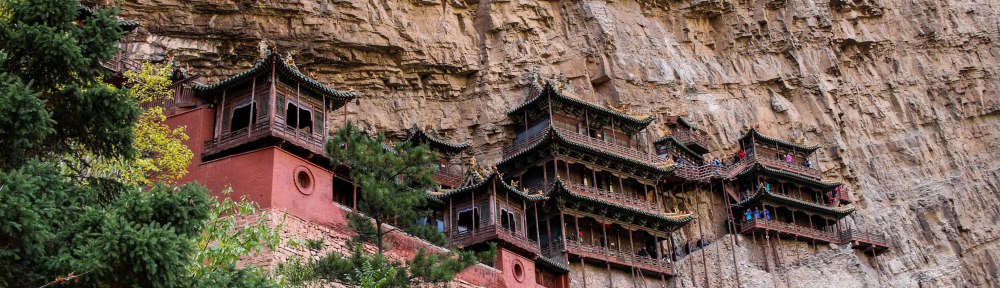
From there we had to go to the last place we really wanted to see while in Datong. The Hanging Monastery at the foot of Mt. Hengshan, better known as hanging temple. It took us 1.5 hours to get there but it was worth the bus ride. Those monasteries sit on crossbeams, half inserted into the rock to stabilize the structure and half hanging over the cliff, which gives a very dramatic picture when standing in front of it. But even more so when you are up there, walking on those narrow wooden floors. Nothing for the faint-hearted. No wonder that the temple is listed as one of the most dangerous buildings in the world. With every step you take you can see how easy it would be to lose balance and just fall off the extremely short railing that wouldn’t even prevent a toddler from falling off. It is understandable that kids smaller than 1,20m are not allowed to set foot on it. The Temple really is one of a kind and apparently the only hanging temple that includes three religions, Buddhism, Taoism and Confucianism. It was built in 491 and I am sure that it will be standing for plenty more years.


That was basically it. After that we went back for some food before taking the late flight back home to Beijing. We left Datong at 10PM and were in bed before midnight. What a great way to spend the weekend and definitely something to be done again, soon.
++++++++++++++++++++++++++++++++++++++++++++++++++++++++++++++++++++++++++++
Ihr kennt mich ja. Ständig Hummeln im Hintern und nicht in der Lage lange an einem Ort zu bleiben. Dementsprechend schwer ist es mir gefallen den ganzen heißen und stressigen Sommer über in Peking zu bleiben. Das Fernweh wuchs ständig an und es war wirklich mal wieder an der Zeit irgendwohin zu fahren. Wohin nur, wenn man keine extra Urlaubstage mehr übrig hat? Irgendwas in der Nähe am besten, gut für einen Wochenendtrip. Freunde hatten mir bereits von einem Ort erzählt den sie als verstecktes Juwel bezeichneten und welcher nur 45 Flugminuten von Peking entfernt liegt. Es sollte also die Stadt Datong werden, die laut meiner Freunde mehr als genug zu bieten hätte um ein Wochenende zu füllen.
Die Flugtickets waren schnell (und günstig) gekauft, die Jugendherberge noch schneller (und noch günstiger) und es konnte losgehen.
Erinnert Ihr Euch noch an meinen Blog über den Sommerpalast in Chengde? Datong hat sich wirklich als ungeahntes Juwel herausgestellt. Eine unbeschreiblich hübsche Stadt mit sauberen Straßen, einer entspannten Atmosphäre (wahrscheinlich wegen der vielen buddhistischen Tempel) und es gibt so viel zu sehen. Ich habe mich sofort in Datong verliebt als wir aus dem Flugzeug gestiegen waren.
Am Klitzekleinen Flughafen von Datong wurden wir also morgens um 8 Uhr von unserer Tour Führerin Sara abgeholt. Sara war unglaublich toll und enthusiastisch. Sara ist eine waschechte Datong-erin und kennt ihre Heimatstadt in- und auswendig und war so glücklich uns alle Seiten zu zeigen. Wir waren insgesamt 12 Personen und hatten eine Unmenge an Fragen, die sie uns nur allzu gern beantwortet hat.
Was haben wir denn nun in Datong gemacht? Wir hatten ja den ganzen Tag noch vor uns, da unser 45 Minuten Flug uns für 8 Uhr nach Datong gebracht hat. Es ging also direkt zur ersten Station. Den Yungang Grotten. Die befinden sich 16 Kilometer westlich von der Innenstadt und liegen direkt in einem Kohlemine-Gebiet. Da kann man nachvollziehen wie die Grotten gefunden wurden. Dieses Labyrinth erstreckt sich dort Kilometerweit und besteht aus 42 Höhlen und mehr als 200 kleinen Nischen. Mehr als 51.000 Buddha Statuen kann man dort bestaunen. Die Yungang stellen eines der wichtigsten Beispiele früher Chinesischer Höhlenkunst dar und werden auf das 5. Und 6. Jahrhundert datiert. 2001 sind die Grotten in die UNESCO Weltkulturerbe Liste aufgenommen worden. Hier könnt Ihr Euch mal die offizielle Seite der UNESCO dazu ansehen: http://whc.unesco.org/en/list/1039
Oh interessante Geschichte: die Grotten sind auch Dank des ehemaligen Französischen Präsidenten Georges Pompidou in die Liste aufgenommen worden. Während der Kulturellen Revolution in China wurden die Grotten zum Glück nicht zerstört, wie so viele andere historischen du kulturellen Stätten. Der Besuch des französischen Präsidenten und dem ehemaligen Chinesischen Ministerpräsidenten Zhou Enlai hat die Bedeutung der Höhlen hervorgehoben und geholfen diese zu schützen. Und als wir so durch die Höhlen liefen hörten wir plötzlich lautes Gemurmel und sahen eine Traube Chinesen um zwei Ausländer herumstehen. Normalerweise nichts Spektakuläres in China, aber eine Unmenge an Kameras, Videokameras und Übersetzer ließen uns dann doch stehenbleiben um mal nachzusehen was der ganze Ramba Zamba sollte. Und da stellt sich heraus, dass der Herr in der Menschenmasse kein Anderer als der Sohn des ehemaligen französischen Präsidenten Pompidou ist. Der war ganz zufällig zur gleichen Zeit da wie wir.
Auf unserem Weg zurück in die Stadt gabs dann viel über Datong zu lernen. Im Vergleich zu anderen Städten ist Datong eher klein, gerade mal 3,5 Millionen Einwohner. Für nahezu 100 Jahre, und während der Nördlichen Wie Dynastie, war Datong die Hauptstadt des Kaiserreiches. Und dieses Flair hat sie noch heute. Die historischen Stadtteile sind von einer großen Stadtmauer umgeben und bieten eine wunderbar weite Aussicht über die Dächer Datongs und da passiert so einiges. Ich hab ja vorher die Kohlemine erwähnt. Datong war bis vor kurzen noch eine der größten Kohleproduzenten in China. Dementsprechend hat die Stadt auch einiges an Geld. Der letzte Bürgermeister hat allerdings bereits vorhergesehen, dass Kohle eben nicht der Weg in eine saubere Zukunft ist. Mit dem Geld aus der Kohleindustrie fing er also an Datong zu einer Touristenattraktion umzuformen. Zum Glück führt der neue und jetzige Bürgermeisten diesen Trend fort. Die Stadt ist im Umbau, egal wohin das Auge reicht. Neue, modern Gebäude ragen dem Himmel empor, mit großzügigen Grünflachen dazwischen. Pompöse Straßen laden ein in der Zukunft eine Großzahl an Touristen zu befördern. Der ehemalige Kaiserpalast wird geraderekonstruiert und sollte noch dieses Jahr fertiggestellt werden. Natürlich eine Replika aber warum auch nicht? Viele Städte haben Schlösser und Burgen nachgebaut, die einmal eine wichtige Bedeutung in ihrer Landesgeschichte hatten und Geschichten aus der Vergangenheit erzählen. Jeder weiss, dass Datong während der Ming Dynastie genauso aussah, doch während der Kulturrevolution zerstört wurde. Ich persönlich finde, dass dies eine großartiger Methode ist um das alte und fast vergessene kulturelle Erbe der Stadt wieder ins Leben zurückzurufen. So zum Beispiel auch mit der Stadtmauer. Die wurde nämlich erst 2012 fertig gestellt und ist atemberaubend. Allerdings spielt sich der richtige Wandel erst innerhalb dieser Stadtmauern ab. Denn das was sich dort im Moment befindet wird gerade komplett demoliert. Statt der für China so typischen Hochhäuser mit ihrem ganz eigenen Kommunismus Charme sollen Platz machen für Nachbildungen der traditionellen Zwei Etagen Häuser aus der Ming Dynastie. Ich bin mir sicher, dass der Großteil der Gebäude kleine Boutique Hotels werden oder als luxuriöse Apartments zum Kauf zur Verfügung stehen werden. Was vielen Leuten ein Dorn im Auge ist, ist für andere eine riesen Verbesserung zu den grauen und charakterlosen Gebäuden der Kommunismus-Ära. Oh ja und die Toiletten funktionieren in den kleinen Häuschen bestimmt auch viel besser.
Am nächsten Tag ging es früh los. Und wenn ich sage früh, dann darf man nicht vergessen, dass wir 12 Personen waren und dass nicht jeder dazu aufgelegt war den Tag um 8 Uhr morgens zu beginnen. Ich glaube es war dann 9.30 Uhr als wir uns endlich auf den Weg gemacht haben um an unserem Zweiten Tag in Datong zur nächsten Attraktion zu düsen. Eine Tour durch die Huayan Tempelanlage, direkt im Stadtzentrum. Ich weiß nicht ob es der erste Sonnenschein des Tages war, die kühle Morgenluft oder die Ruhe der Tempelanlage, aber der komplette Morgen war ein einziger friedlicher Spaziergang. Ich kann mich nicht erinnern wann ich mich bei einem Rundgang so ausgeglichen gefühlt habe.
Von dort ging es weiter zu dem Ort der uns nach Datong geführt hat. Der hängenden Klosteranlage am Fuße des Hengshan Berges. 1.5 Stunden saßen wir im Bus aber die Fahrt war jede Minute wert um am Ende vor dieser Naturgewalt zu stehen. Die Tempel sind in den Berg hineingebaut und sitzen zur Hälfte auf Stehlen um die Struktur vor dem Abstürzen zu schützen. Das ganze sieht unglaublich dramatisch aus wenn man so davor steht. Aber fühlt sich noch intensiver an wenn man die engen Holzstiegen selbst hinaufsteigt. Mit jedem Schritt wird einem klarer, dass man hier ganz einfach sein Gleichgewicht verlieren und über das extrem kurze Geländer in die Tiefe stürzen könnte. Verständlich, dass Kinder unter 1,20 Meter keinen Zutritt zu der Anlage haben. Aber der Tempel ist wirklich einmalig und angeblich der einzige hängende Tempel der die drei Religionen Buddhismus, Taoismus und Konfuzianismus vereint. Es wurde 491 gebaut und ich bin mir sicher, dass der Tempel noch viele Jahre hängen wird.
Das wars im Großen und Ganzen. Am Ende des Tages hatten wir noch Zeit was zu essen bevor wir um 22 Uhr den Flieger zurück nach Peking genommen haben und noch vor Mitternacht bequem in unserem Betten lagen. Geniale Art ein Wochenende mit Freunden zu verbringen.
 Denise and Shane got on a plane